Anterior cruciate ligament (ACL) tears are more common in women than in men, and several factors contribute to this difference. One reason is anatomical differences between men and women. Women typically have a wider pelvis, which can lead to a greater angle between the femur and tibia, known as the “Q angle.” This altered alignment places stress on the knee joint, particularly during activities that involve cutting, jumping, or pivoting, which are common causes of ACL injuries. A wider Q angle can cause increased strain on the ACL, making it more vulnerable to tears in women.
Another contributing factor is differences in muscle strength and neuromuscular control. Women generally have less muscle mass around the knee, particularly in the quadriceps and hamstrings, compared to men. This muscle imbalance can affect the stability of the knee joint, making it harder to absorb and control forces during high-impact activities. Additionally, women may have a less effective neuromuscular response to dynamic movements, which increases their risk of landing awkwardly or overstretching the ACL. This decreased strength and control contribute to the higher incidence of ACL tears among female athletes.
Hormonal fluctuations also play a role in the increased risk of ACL injuries in women. Research suggests that estrogen and other hormones can influence ligament laxity, making the ACL more prone to injury during certain phases of the menstrual cycle. Studies have shown that women may experience increased ligamentous looseness during the luteal phase (post-ovulation), which can lead to a higher likelihood of the ACL being torn during physical activities that involve sudden changes in direction or jumping.
Finally, differences in sport participation and injury prevention strategies contribute to the higher rate of ACL tears in women. Women tend to participate in sports that involve more cutting, pivoting, and jumping, such as soccer, basketball, and volleyball, which are known to increase the risk of ACL injury. In addition, female athletes may not always receive the same level of injury prevention training and conditioning as male athletes, particularly in terms of strengthening exercises and techniques that promote knee stability. As a result, women may not have the same protective mechanisms in place to avoid ACL tears, further increasing their vulnerability.
3 stages of ACL Rehab
Rehabilitation after ACL reconstruction surgery is typically broken down into three stages: the acute phase, the strengthening phase, and the return-to-sport phase.
The acute phase, which lasts for the first few days to weeks after surgery, focuses on reducing pain, swelling, and inflammation while protecting the knee. During this stage, the main goals are to control swelling through rest, ice, compression, and elevation (R.I.C.E), and to restore range of motion, particularly in flexion and extension of the knee. Patients may begin gentle exercises such as quad sets, heel slides, and patellar mobilizations to prevent stiffness and promote blood flow to the injured area, but the emphasis is on limiting stress to the healing ACL and surrounding structures.
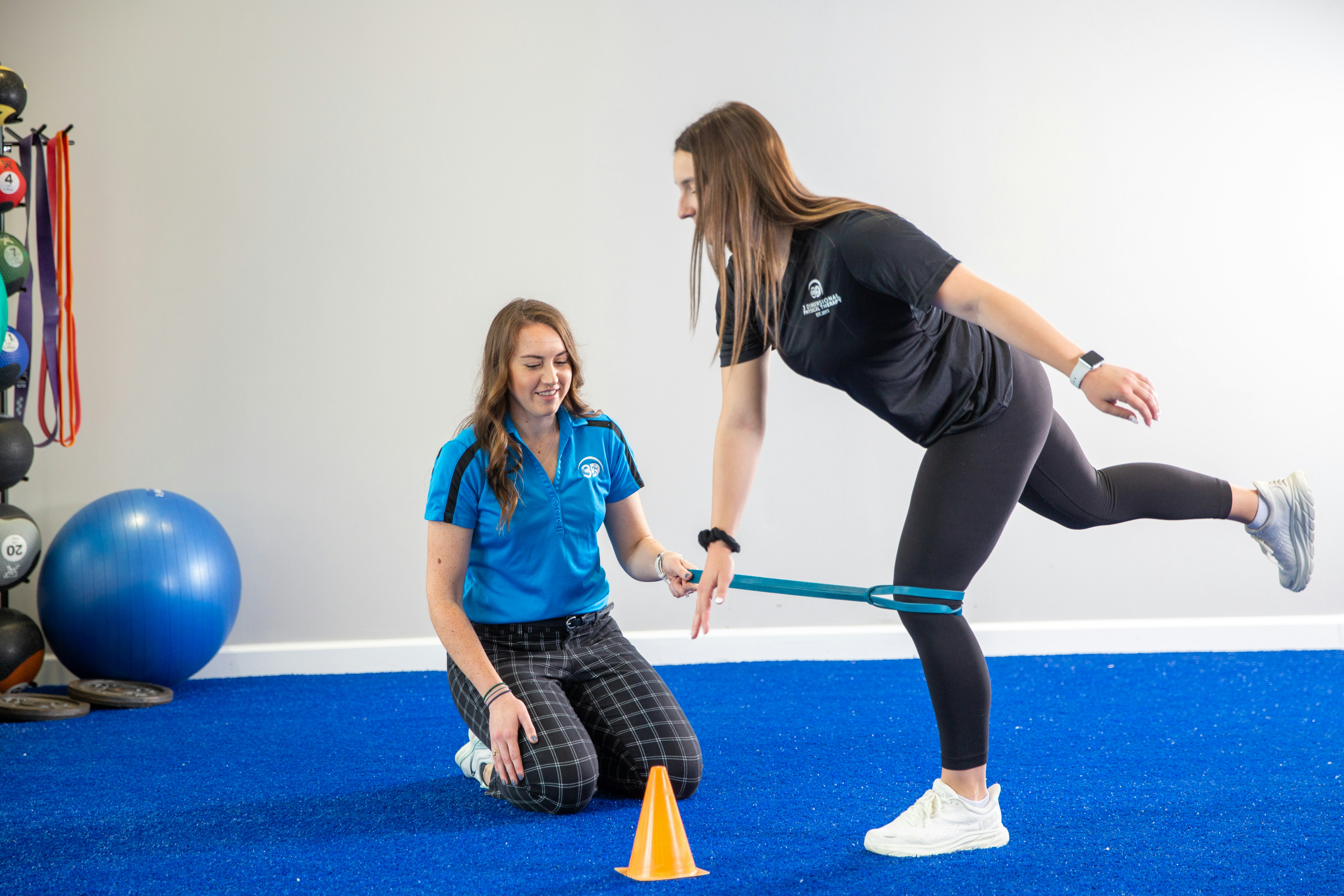
The strengthening phase begins once the knee has achieved a basic range of motion and pain and swelling have subsided. This phase typically lasts several weeks and focuses on rebuilding strength in the muscles around the knee, including the quadriceps, hamstrings, and calves. Strengthening exercises such as leg presses, lunges, and step-ups are introduced to increase muscle endurance and improve the stability of the knee joint. As strength improves, more dynamic exercises like resistance band work, leg extensions, and balance training are incorporated to further engage the knee and help restore proper movement patterns. Functional activities such as squatting and single-leg exercises are also introduced to simulate real-world motions and build confidence in the injured knee.
The final phase, the return-to-sport phase, focuses on preparing the athlete to safely return to their sport or high-intensity activities. This phase typically begins when the individual demonstrates adequate strength, flexibility, and stability in the knee. It emphasizes more sport-specific drills that involve cutting, pivoting, and jumping to mimic the demands of the activity. Plyometric exercises, agility drills, and cardiovascular conditioning are integrated to help improve the athlete’s performance and recondition the body for the stresses of their sport. Additionally, patients undergo functional testing, such as single-leg hops or agility tests, to ensure they can return to their sport with a reduced risk of re-injury. At the end of this phase, the individual is expected to have regained full confidence and functionality in their knee.
Injury Prevention
Injury prevention for ACL tears focuses on strengthening the muscles around the knee, improving neuromuscular control, and using proper technique during physical activity. Strengthening exercises that target the quadriceps, hamstrings, and calves help stabilize the knee joint, reducing the strain on the ACL. Additionally, exercises that focus on balance, proprioception, and agility, such as single-leg drills and plyometric training, improve neuromuscular control, allowing athletes to better absorb impact forces and change directions without compromising knee stability. Proper jumping, landing, and cutting techniques are also critical; athletes should be taught to land with their knees slightly bent and aligned with their toes, avoiding excessive inward movement (valgus collapse). In some cases, wearing a knee brace during high-risk activities may provide added support. Lastly, sports-specific injury prevention programs, such as the FIFA 11+ or the PEP program, have been shown to reduce ACL injury rates by incorporating these components into training routines.
Categorized as: Articles