Torn ACL: Do You Really Need Surgery?
Hearing that you’ve torn your ACL can be overwhelming. Many people assume surgery is the only option—especially if they’re active. But the truth is more nuanced. For some people, structured physical therapy alone can lead to excellent outcomes, even without ACL reconstruction.
Let’s break down what that means, who it applies to, and how physical therapy fits into the decision.
What Does the ACL Do?
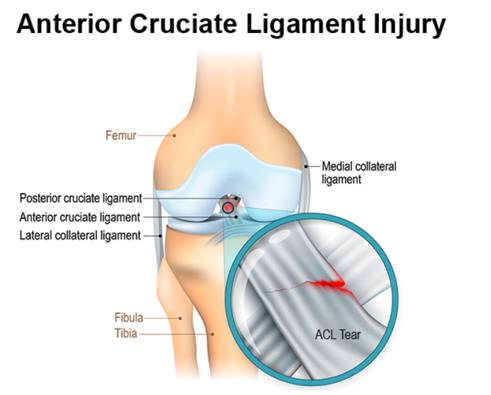
The ACL (Anterior Cruciate Ligament) provides stability to the knee. Tearing the ACL can cause giving way during sports or buckling while walking down the street.
When it tears, people may experience:
- Knee “giving way”
- Instability during sport
- Difficulty with cutting, pivoting or quick direction changes
While surgery can restore mechanical stability, it’s not the only path to regaining function.
Can You Recover Without Surgery?
Yes—some people can. Research over the last decade has shown that carefully selected patients can achieve similar pain relief, function, and quality of life with physical therapy alone compared to surgery. These individuals are often called “copers.” Copers are people who can stabilize their knee using strength, coordination, and neuromuscular control—even without an ACL.
What the Research Says
A large review of studies published in 2023 found that many patients with isolated ACL tears had similar long-term outcomes whether they chose surgery or high-quality rehabilitation
A 2024 review of multiple studies showed:
Patient-reported outcomes (how the knee feels and functions) were often similar with or without surgery
Surgery improved mechanical stability, but that didn’t always mean better day-to-day function
Some people returned to activity just as successfully with rehab alone
👉 The takeaway: Surgery isn’t automatically required for everyone.
Who Might Be a Good Candidate for Non-Surgical Rehab?
You may be a good candidate for rehab-first treatment if you:
Have an isolated ACL tear (no major damage to other knee ligaments or meniscus)
Can fully straighten and bend your knee without pain
Have minimal or no swelling
- Can regain good quadriceps strength
- Don’t experience frequent episodes of the knee “giving way”
At 3DPT, we use objective testing—not guesswork—to help guide this decision.
How Do We Decide? The Coper Screening Process
Before recommending non-surgical rehab, we perform a structured screening that may include:
Single-leg hop tests
Strength testing
Functional questionnaires
Discussion of your activity goals
If you meet specific criteria, physical therapy may be a safe and effective first step. If not, we help guide you back to your orthopedic provider with clear information.
What Does Physical Therapy Look Like?
Rehab for ACL copers goes beyond basic strengthening. It includes:
Progressive strengthening of the hips and legs
Balance and coordination training
Agility and sport-specific drills
Perturbation training (controlled challenges that teach your knee to react and stabilize)
The goal isn’t just to get stronger—it’s to teach your body how to protect your knee during real-world movement.
Examples of Perturbation Training:
What If You Want to Return to Sports?
Many people can return to recreational activities—and even some sports—without surgery.
However:
Athletes in high-demand sports involving cutting and pivoting (soccer, basketball, football) may still choose surgery
Others may successfully return with rehab alone, depending on their response to therapy and goals
There is no single “right” answer—only the right answer for you.
Example of a single-leg hop test:
The Bottom Line
An ACL tear does not automatically mean surgery.
With proper evaluation, evidence-based physical therapy, and shared decision-making:
Some people can avoid surgery altogether
Others may choose surgery knowing they explored all options first
Everyone benefits from high-quality rehab—before or after surgery
At 3DPT our role is to help you understand your options, guide you through the evidence, and support the decision that best fits your life and goals.
If you’ve been told you need ACL surgery or aren’t sure what your next step should be, we’re happy to help you navigate the process. Click below to schedule an evaluation with a 3DPT physical therapist!